
Casino dice games in Australia: legal limits
 Available in AU
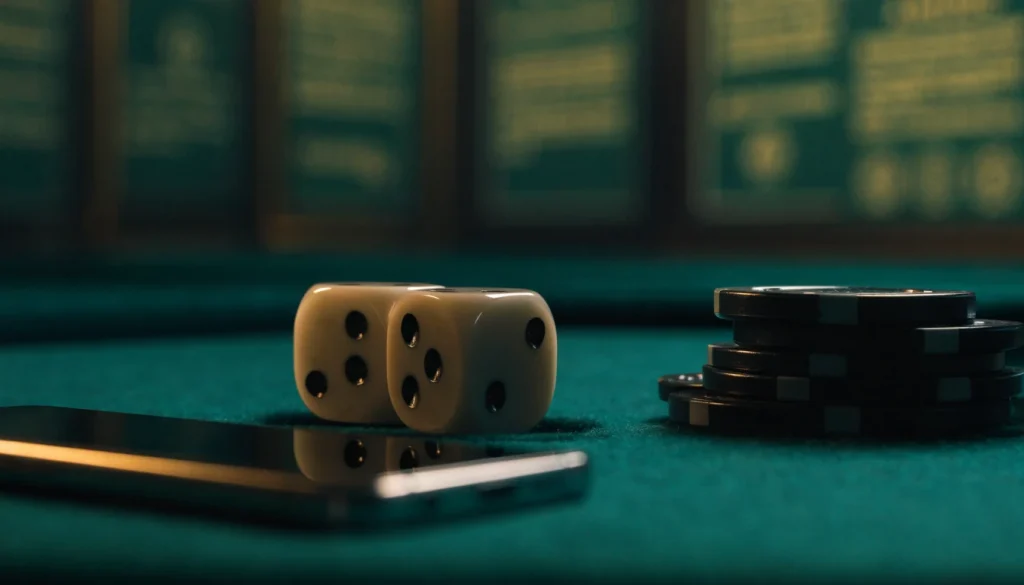
The guide separates dice-game rules and odds from the legal status of real-money online casino services in Australia.
Table of Contents
- Online Dice Gambling and Australia’s Legal Boundary
- Casino Dice in a Country of Pokies
- Playing Dice Online: The Limits of a Rules Guide
- Casino Games Built Around Dice
- Craps and the Casino Dice Table
- Rules, Odds and What “Best” Can Actually Mean
- What Counts as a Casino Dice Game?
- Strategy, Chance and the Limits of Advice
- Live Dice: What the Format Would Need to Show
- Where the Dice Are Rolled
Online Dice Gambling and Australia’s Legal Boundary
A casino game built around dice may look like a small subject: a table, a handful of cubes, a result determined by a roll. Online, however, the legal question is not whether dice are involved or whether a game resembles a familiar casino pastime. It is whether an operator is offering a prohibited online casino service to someone in Australia. The distinction belongs to the law, not the game’s packaging.
Australia’s Interactive Gambling Act 2001 restricts operators from providing real-money online casino games to people physically in the country. The prohibition covers casino-style services, including table games, as well as other familiar online casino products. A digital dice game offered for money does not sit outside that boundary merely because it has a different name or a simpler screen. The central issue is the service being supplied and where its customer is located.
That arrangement places the legal burden on the operator. Offshore casinos may accept Australian payments and operate under licences issued elsewhere, but an overseas licence does not make their real-money casino service lawful to provide to people in Australia. A payment going through is not a ruling on legality. Nor does a site’s availability at a particular moment establish that it has permission to offer the service.
Choosing a casino for dice games in Australia means checking the available licensing information and any practical details that are provided before you play. This list offers a concise reference to the known details for each operator.
1. WinSpirit Casino
License: Curacao eGaming OGL/2024/923/0383 (Antillephone N.V.) · Min. deposit: A$30 WinSpirit Casino lists a Curacao eGaming licence, OGL/2024/923/0383, held through Antillephone N.V. Its stated minimum deposit is A$30.
2. Neospin
License: Curacao Gaming Control Board OGL/2023/176/0095 (Hollycorn N.V.) Neospin lists a Curacao Gaming Control Board licence, OGL/2023/176/0095, under Hollycorn N.V.
3. Vegaz Casino
License: Curacao OGL/2024/1335/0780 · Min. deposit: EUR 20 Vegaz Casino lists a Curacao licence, OGL/2024/1335/0780. Its stated minimum deposit is EUR 20.
4. SpinsUp
License: Curacao Gaming Control Board OGL/2023/174/0082 (Dama N.V.) SpinsUp lists a Curacao Gaming Control Board licence, OGL/2023/174/0082, under Dama N.V.
5. Thor Casino
License: Curacao – Antillephone N.V. (Versus Odds B.V.) · Min. deposit: EUR 20 Thor Casino lists a Curacao licence held by Antillephone N.V. for Versus Odds B.V. Its stated minimum deposit is EUR 20.
6. 7Bit Casino
License: Curacao, operated by Dama N.V. 7Bit Casino is listed as operating under a Curacao licence, with Dama N.V. as its operator.
7. Uptown Pokies
License: Curacao (operating since 2017) · Min. deposit: A$20 Uptown Pokies is listed as operating under a Curacao licence and has been operating since 2017. Its stated minimum deposit is A$20.
8. Roby Casino
License: Curacao eGaming (Roby Games Ltd) Roby Casino lists a Curacao eGaming licence held by Roby Games Ltd.
9. Kingmaker
Payout speed: crypto ~90 minutes, fiat 1-5 days · Min. deposit: A$30 Kingmaker lists an approximate crypto payout speed of 90 minutes and a fiat payout timeframe of 1–5 days. Its stated minimum deposit is A$30.
10. Bizzo Casino
License: Curacao Gaming Control Board (TechSolutions Group N.V.) Bizzo Casino lists a Curacao Gaming Control Board licence, with TechSolutions Group N.V. as the operator.
The law’s focus on supply can be easy to miss. A person may encounter an offshore site that presents dice games alongside other casino products, with familiar payment options and polished claims about its status. Yet these features do not alter the Australian rule. The service remains prohibited when offered to a person physically in Australia. The digital border may be less visible than a national one. It is still a border.
The position for players is different from the position for operators. People in Australia are not criminalised simply for using an offshore casino site. That does not convert the site’s offer into a lawful Australian service, and it does not make the operator’s offshore licence a local authorisation. It means the law distinguishes between the provision of prohibited services and the individual who encounters or uses them. Legal responsibility is not distributed evenly.
ACMA and enforcement
The Australian Communications and Media Authority, usually known as ACMA, is the federal body responsible for enforcing the Interactive Gambling Act and monitoring compliance with federal interactive gambling laws. Its role is not to certify an offshore casino for Australians. It is to act against prohibited services and related advertising under the national framework.
One enforcement tool is access blocking. ACMA can ask Australian internet service providers to block websites that provide prohibited interactive gambling services or advertise them in Australia. A blocked site may become inaccessible through ordinary connections in the country, although the existence of a block does not itself tell a user every detail about the operator or its claims. The practical effect is plain enough: the regulator can make access harder.
Crash casino games in Australia: access and risk
ACMA reports more than 1,455 illegal gambling and affiliate websites blocked since enforcement actions began in November 2019. The figure includes affiliate sites as well as gambling websites, a reminder that enforcement can reach beyond the casino itself to advertising and referral infrastructure. The regulator’s work is not a single sweep followed by a settled map. Websites can appear, change, or leave; blocking is one part of continuing oversight.
There is also a reported count of illegal services that have withdrawn from the Australian market since ACMA began enforcing the rules in 2017. The accounts disagree: one gives a figure of more than 210 services, while another says over 190. Both describe withdrawals following enforcement, but the difference should not be disguised as a single exact total. The broader point is that enforcement has prompted some operators to stop serving the market.
For anyone writing about casino dice online, this boundary comes before questions of format or terminology. “Dice” does not create a separate legal category that overrides the Act. A real-money online casino service remains subject to the same restriction whether its interface centres on dice, cards, a wheel or another casino-style activity. The law does not turn on the novelty of the screen.
This is a regulatory boundary, not a description of how to play. Australia’s approach leaves a clear distinction between a casino service being offered to people in the country and a player being personally criminalised for using an offshore site. ACMA’s blocking powers give that distinction practical force. The table may be virtual; the jurisdiction is not.
Legal Prohibition
Under the Interactive Gambling Act 2001, it is prohibited for operators to provide real-money online casino services to people physically located in Australia.
Casino Dice in a Country of Pokies
In Australia, casino dice sit beside a much more familiar public argument: the place of poker machines in everyday gambling. The contrast matters. Dice suggest a compact contest organised around a throw; pokies belong to a social and political conversation about machines, venues and losses. They are not versions of the same game, and treating them as interchangeable would blur the very distinction that makes the comparison useful.
The phrase “casino dice” can summon an image of a table and a handful of cubes, but the Australian setting around gambling is shaped strongly by pokies. Their presence in venues has made machine play a recurring subject of scrutiny, including debate about what players lose and whether the conditions of play should change. A dice game belongs to a different category. Its cultural meaning, however, is still encountered in a country where gambling’s public consequences are often discussed through the machines.
Real Cash Online Pokies in Australia: Key Distinctions
A report published by gamble.com.au put Victorian poker-machine losses at $2.6 billion over a year, a figure more than $44.7 million above the amount recorded in 2015. Such totals turn individual play into a public question. The arithmetic is stark, but it does not describe every person’s experience or explain why anyone plays. It does show why debate about gambling can move quickly from leisure to policy: a sum accumulated across many players is no longer merely a private matter.
One venue offers an even more local scale. Gamble.com.au reported that the Epping Plaza Hotel, in Melbourne’s north, generated more than $21 million from 100 machines over the preceding year. The detail makes a broad total tangible: a named place, a defined bank of machines, and revenue concentrated in a familiar setting. It does not make the machines dice, nor does it tell the story of each person who used them. It reveals how closely the public conversation can attach gambling figures to particular venues.
Mines Casino Game in Australia: What to Verify
That concentration helps explain why reform proposals have focused on the terms of machine play. Senator Nick Xenophon and MP Andrew Wilkie proposed limiting poker-machine bets to $1. A proposal is not the same as an enacted rule, but its shape is revealing: the debate was not about renaming a game or changing its imagery. It was about the amount at stake on a machine and the role that stake might play in accumulating losses.
The argument also shows how different gambling objects invite different kinds of attention. A machine can be counted across a venue and its financial activity gathered into a public figure. Dice, by contrast, are often imagined through the visible moment of chance: a throw, a result, a pause before the next one. That image may be vivid, but it cannot stand in for a social account of gambling. A dramatic object is not automatically the most consequential one.
The distinction is worth keeping when the subject is a casino dice game in Australia in 2026. The phrase points towards a form of play; the pokies debate points towards a documented pattern of losses and proposals for intervention. One should not be used as a proxy for the other. A reader interested in dice may be entering a conversation about games, while the country’s established machine debate concerns venues, aggregate spending and possible limits. Two subjects, sharing a broad label but not the same evidence.
Machine Gambling Statistics
Victorian poker-machine losses reached $2.6 billion over a year, with single venues like the Epping Plaza Hotel generating over $21 million from 100 machines.
There is a dry irony in the way public attention is allocated. Dice carry the old theatre of chance in a form small enough to fit in a hand, while poker machines have generated figures large enough to anchor policy arguments. The contrast is not a ranking of which is more entertaining, nor a claim about which causes more harm. It is a reminder that the public meaning of gambling is shaped less by the romance of an object than by the consequences that become visible around it.
For that reason, casino dice should be discussed without borrowing the weight of pokies statistics. The reported Victorian losses and the Epping Plaza Hotel figure belong to machine gambling; the proposed $1 limit belonged to a reform debate about poker machines. They provide social context for gambling in Australia, not evidence about dice play. Keeping the categories separate is more than tidy language. It leaves the human and political questions attached to the activity they actually describe.
Playing Dice Online: The Limits of a Rules Guide
A useful guide to playing a casino dice game would begin before the first roll. It would identify the game being described, explain what the player is trying to achieve, set out how a round begins and ends, and define the choices available along the way. Without those pieces, “how to play” is less an instruction than a label attached to a subject.
That distinction matters because dice are objects, not rules. A guide about playing dice online cannot assume that every game using dice works alike, or that a description of one format explains another. The broad question of which casino games use dice belongs to a different discussion. Here, the concern is narrower: what would need to be clear before instructions could be followed.
Live Baccarat Online in Australia: Legal Guide
At a minimum, a rules explanation would have to make the sequence of play intelligible. It would say what starts a round, what determines its outcome, whether decisions are made before or after a roll, and when the round is settled. It would also explain the language used for those decisions. A reader should not have to infer whether a term describes a choice, an outcome or a condition attached to a wager. In a game governed by chance, ambiguity about the process is quite enough; ambiguity about the explanation is an avoidable extra.
The word “casino” can make a game sound more uniform than it is. A physical table, a digital interface and a simplified demonstration may present different ways of showing the same idea—or entirely different experiences. A proper rules guide would identify which one it covers rather than letting the setting do the explanatory work. Online, the screen may organise information into buttons and panels, but a button is not an explanation. The order of actions and the meaning of each choice still need to be stated in plain language.
A guide would also need to separate instructions from claims about likely results. Telling someone what an available decision means is not the same as showing what it can achieve, and a confident tone cannot substitute for a clear account of the rules. Those are separate questions. A short description that skips the sequence may appear accessible while leaving the central uncertainty untouched.
Do
- Identify the specific game and version
- Define the sequence of play and outcomes
- State the meaning of each choice in plain language
Don’t
- Assume all dice games work the same way
- Use buttons or screens as a substitute for rules
- Blur instructions with claims about likely results
In Australia, the distinction between describing a game and offering it for real money is consequential. The Interactive Gambling Act 2001 bars operators from providing online casino-style games to people in Australia, including table games and other familiar casino formats. A player is not criminalised merely for using an offshore service, but that does not turn the service into a lawful local casino. ACMA enforces the federal rules and can seek website blocking through Australian internet providers. The boundary concerns the service, not the grammar of a rules page.
A “free” label does not answer every question about what a digital game provides. It says nothing by itself about whether the experience is a demonstration, what functions it includes, or whether money is involved. Those details would have to be made explicit in any explanation. Free play and real-money gambling should not be blurred into one vague promise, particularly where Australian law draws a firm line around the latter.
Nor should a rules guide be mistaken for an invitation. Real-money online casino services are not something to promote to Australians. Gambling is for adults aged eighteen or over, and for vulnerable people it can cause serious harm. Clear description has a modest purpose: to explain a game without disguising its terms, its setting or the difference between information and an offer.
The best guide, then, would be exact about the game it names and restrained about what it claims. It would explain the sequence, define the choices and distinguish instruction from outcome. Anything less leaves the reader with the appearance of knowledge, which is not quite the same thing.
Live Blackjack Online in Australia: Legal Limits
Casino Games Built Around Dice
The phrase “casino games with dice” sounds like a shelf label, but it can conceal several different ideas. Dice might be the central instrument of a game, one component among others, or simply part of the visual language used to make chance legible. Those distinctions matter more than a search for a single canonical format.
A game built around dice can be imagined along several axes. One is the number of dice in use: a person asking about a game with two dice, or one involving three, is asking a narrower question than someone asking about dice games generally. Yet the count alone would not explain the game. It would not establish how a turn works, what outcomes matter, whether players act in sequence, or what role a table or dealer might have. A number is a starting point, not a ruleset.
Another axis is the dice’s job. In one possible design, a roll could determine the central outcome. In another, dice might supply one stage of a larger process, with other components shaping what the result means. A casino game may also borrow dice as a symbol of unpredictability without making the physical roll its whole structure. The word “dice” therefore does not settle whether a game is a table game, a digital adaptation, or a broader chance-based format.
That variety is easy to flatten in a catalogue. A heading that groups every game involving dice can make unlike things appear interchangeable, as if the same object guaranteed the same experience. It does not. A pair of cubes can sit at the centre of a formal table game or appear within a design whose mechanics are otherwise quite different. The resemblance may be visible; the underlying structure may not be.
Real Money Casino Table Games in Australia
The number of dice can shape a game’s design, but it is not enough to support claims about its character. More dice do not, by themselves, tell anyone whether a format is simpler, more complex, more social or more favourable. Those judgements depend on rules and outcomes, not on counting the objects in the picture. Without that distinction, “two-dice game” becomes a description mistaken for an explanation.
This is why broad categories are useful only up to a point. They help sort possible formats, but they cannot substitute for an account of what a particular game asks its participants to do. Nor should a familiar casino setting be taken as proof that every dice-based format shares the same conventions. Labels travel easily. Mechanics do not.
There is also a difference between a game whose identity depends on dice and one that merely includes them. The first invites attention to the roll as a defining event; the second may use dice as one element within a larger arrangement. That boundary can be blurred in marketing language, where a visible prop often does more work than a precise description. Dice are wonderfully compact symbols of chance. They are less helpful as a complete explanation.
So the category is best treated as a family resemblance rather than a single game. The number of dice, their place in the design and the surrounding rules all affect what a format actually is. A label can point toward that territory. It cannot map it.
Craps and the Casino Dice Table
Craps carries a particular kind of casino imagery: a table, dice, a gathering of players and a game whose name often stands in for the whole dice-table tradition. That image is easy to recognise. It is harder to turn into a reliable account of play without being precise about the version, its rules and the way the table is run.
Aristocrat Online Pokies in Australia: What to Know
The word “craps” may appear beside promises of casino dice or real dice, but those phrases do not by themselves tell a reader what a game involves. A name is not a ruleset. Nor does a picture of dice establish whether they are physical objects, digital representations or simply part of a game’s presentation. Those distinctions matter when the subject is a casino table rather than dice as a general motif.
A careful description of craps would need to do more than repeat the familiar label. It would explain how a round begins and ends, what actions are available, how any table markings guide play, and how the outcome of each wager is settled. Without those details, terms such as “table dice” create atmosphere rather than understanding. The same goes for images of a crowded rail or a pair of dice in mid-air: suggestive, perhaps, but not an explanation.
That gap is worth noticing because casino language often makes a game seem self-explanatory. The table appears to supply its own instructions; the dice seem to make chance visible. Yet a player’s choices, if any, depend on rules that cannot be inferred from a name or a photograph. A craps page that presents a confident practical guide should therefore make its version and conditions clear, rather than borrowing authority from the traditional casino-table setting.
The distinction between craps and the broader category of casino games involving dice also deserves care. Craps is the specific subject here, not a synonym for every game in which dice happen to appear. The table is part of its recognisable identity, but that does not make every dice game a craps game, or every display labelled “craps” enough to establish how it works. Labels have limits.
Pokies & Games: Slots and Casino Game Types
For Australian readers, there is a further separation between describing a casino game and promoting access to one. Real-money online casino services are prohibited when offered to people in Australia under the Interactive Gambling Act 2001. The fact that a game is presented as a familiar casino-table experience does not change that boundary. Players themselves are not criminalised for using offshore sites, but the law restricts operators from supplying these services locally.
This leaves a useful standard for any discussion of craps: name the subject accurately, distinguish description from instruction, and do not let the staging substitute for rules. Dice can be plainly visible while the terms of play remain obscure. The table is not the explanation.
Rules, Odds and What “Best” Can Actually Mean
A useful account of casino dice rules begins by identifying the game and the version being described. The word “dice” names an object, not a complete rulebook. A proper explanation would need to set out the aim, the order of events, what each roll can mean, how a round ends and how its result is settled. It would also need to make exceptions visible. A rule that appears minor in a summary can change what a result means.
Video slots in Australia: free play and game rules
That is the territory of a rules guide: definitions, sequence and consequences. It is not the same as a claim that one game is better than another. Nor does a neat description establish that two versions with similar names operate in the same way. Without the precise rules in view, comparisons risk placing unlike things on a common scale.
Odds demand more than a game’s name or a broad description. They depend on the outcomes the rules recognise and on how those outcomes affect settlement. A meaningful comparison would therefore have to specify the version being assessed and explain the calculation behind its figures. Quoting a number without that context gives it the appearance of precision while leaving its meaning uncertain.
“Best” is less a mathematical term than a choice of priorities. One person might mean rules that are easy to follow; another might mean a particular pace or style of decision-making. Those preferences cannot be collapsed into a universal ranking. Even a carefully assembled comparison would need to say what it measures, what it leaves out and whether the underlying versions are genuinely comparable.
Dragon Link Online Pokies in Australia: What Is Known
The label can also blur separate judgements. A game may be straightforward to explain without being preferable to someone else; a published odds comparison, if available, would answer a different question from one about clarity or atmosphere. A single winner would conceal those distinctions rather than resolve them.
For Australian readers, there is a further boundary around the subject. The Interactive Gambling Act 2001 prohibits operators from providing real-money online casino games to people in Australia. A discussion of what a rules guide or comparison would require is not an invitation to use such a service.
The careful standard is modest: name the version, explain the terms, show how any comparison is derived, and state what “best” is supposed to mean. Without those parts, confidence is decoration.
What Counts as a Casino Dice Game?
The phrase “casino dice game” can describe more than one kind of relationship between dice and a game. At its broadest, it means a casino game in which dice have a role. That role might be central to the game’s identity, or it might be one element among others. The label alone does not tell how the game works.
Online Pokies in Australia: Bitcoin Payouts and Risks
A useful distinction is between a game built around dice and a game that merely includes them. In the first case, the dice are the defining feature: remove them and the game would no longer be recognisable as the same activity. In the second, they could be one component of a larger design. Both may fit the broad phrase, though they would not necessarily share rules, pace or table arrangements.
That distinction matters because “the dice game in a casino” can sound as though there is one established answer. There is not. Craps is the narrower, familiar subject when the discussion turns specifically to a dice-table game, but it does not stand for every casino game that may use dice. A category is wider than its best-known member.
Nor does the word “casino” settle the question. It describes the setting or commercial context, not a particular set of mechanics. Dice can be present without making two games equivalent; the same object does not produce the same activity. A pair of dice is not a definition.
Best Pokie Machines to Play in Australia: A Guide
The boundaries also depend on what the phrase is being used to distinguish. A discussion of casino dice games may concern the role dice play, while a discussion of craps concerns one named subject. A discussion of rolling dice concerns the physical act and its setting. Those ideas touch, but they are not interchangeable.
So the term is best treated as an umbrella, not a rulebook label. It identifies a family resemblance: dice belong somewhere in the game’s structure. It does not, by itself, establish a particular game, explain its procedures or show how it differs from every other format. The name opens a category. The details have to do the separating.
Strategy, Chance and the Limits of Advice
Advice about a dice game can sound more certain than the game permits. “Strategy” suggests that a player can make choices that shape an outcome; it does not, by itself, show which choices matter, how much they matter, or whether any advantage follows. Those answers depend on the particular game and its terms.
Three-Reel Slots in Australia: Features and Free Play
That distinction matters when casino dice are discussed as a single subject. A recommendation that might fit one set of rules cannot simply be transferred to another. Even a sensible-sounding instruction needs a basis: the available choices, their costs and the way outcomes are settled. Without those details, advice risks becoming a confident sentence with no working underneath.
Chance is not a synonym for helplessness, but neither is decision-making proof of control. A player may be able to choose between actions while having no sound basis for claiming that one reliably improves the result. The difference is easy to blur. A story about a successful choice can feel persuasive after the event; it does not establish that the choice caused the success or will repeat it.
This is where casino dice strategy reaches its limit. General habits—understanding what a decision commits, setting a spending boundary and stopping when that boundary is reached—are not dice-specific techniques. They are ways to keep a gambling decision from expanding into a claim about mastery. No tactical formula can be responsibly offered without knowing the game’s actual structure, and no confident language can substitute for that knowledge.
Attention: Gambling can cause serious harm, particularly for vulnerable people; strategy should not be used to suggest that persistence can turn chance into income.
There is also a social cost to overstatement. Calling a game “beatable” can turn uncertainty into an implied promise, inviting people to treat gambling as a test of skill they have merely not yet passed. That framing shifts responsibility onto the player when outcomes disappoint. It is tidy, and unfair.
Gambling is for adults aged eighteen or older. It can cause serious harm, particularly for people vulnerable to gambling-related problems. Strategy should not be used to disguise that risk, or to suggest that persistence will turn chance into income. A careful account separates the choices a game allows from claims about what those choices can achieve.
Live Dice: What the Format Would Need to Show
“Live” describes a presentation, not a legal category. A page using the phrase live dice might suggest that a game unfolds in real time, but the label alone cannot establish what is being shown, who operates it or where the service is offered. The distinction matters: atmosphere is easy to imply; accountability is harder.
Five-Reel Slots in Australia: Bonuses and RTP
A clear description would need to say whether the dice are physically rolled or represented by software, how the result is recorded, and what role—if any—a presenter or camera has. It would also need to explain how a participant’s decisions connect to the event, rather than using “live” as decorative shorthand. These are questions a format description should answer, not claims that any particular production follows such a model.
The Australian boundary comes first. Under the Interactive Gambling Act 2001, operators cannot provide real-money online casino games to people physically in Australia. A live feed would not change the nature of the service if it remained an online casino game for money. The Australian Communications and Media Authority enforces the law and can ask internet providers to block access to prohibited services. Players themselves are not criminalised for using offshore sites, but that does not make the service lawful for its operator to provide here.
Bitcoin Pokies in Australia: Wallets and Payments
So “casino live dice” is not enough to establish either a transparent format or a permissible one. The description would need to separate the visual experience from the underlying game, explain how results are determined, and make the jurisdiction unmistakable. Without those distinctions, a live label tells little beyond the intended mood.
That is a thin promise.
Where the Dice Are Rolled
The image behind a game in which someone rolls or throws dice is unusually physical: a hand releases small objects, they travel across a surface, and the result becomes visible. That simple action suggests a shared setting, with attention gathered around the moment of release. It does not, by itself, identify a particular casino game or establish where such a game is offered.
The difference between “rolling” and “throwing” is mostly one of emphasis in ordinary description. Rolling draws attention to the dice moving; throwing draws attention to the person’s action. Neither word tells much about the rules, the shape of the playing area, or what happens after the dice stop. Those details belong to a specific game, not to the image conjured by the verbs.
7-Reel Slots in Australia: Layouts and Game Rules
Nor does the phrase prove that players handle physical dice in every setting described as a casino dice game. A search for a game where the player throws dice may be seeking the tactile scene itself; another person may simply be trying to distinguish dice from cards or a screen-based result. The wording leaves that intention open.
In Australia, the distinction matters because a vivid table-side image can be mistaken for a description of local availability. A scene involving dice is not, on its own, evidence that a real-money casino service may lawfully be offered to people in the country. The physical gesture and the legal status of the service are separate questions.
There is a small cultural force in the act: unlike a number appearing on a screen, a thrown object makes chance seem to have travelled through the room. But the gesture does not make the outcome more knowable, nor does it supply a venue, a rulebook or a reliable account of how a particular casino product works.
A roll is a scene, not a specification.
Pokies

Aristocrat Online Pokies in Australia: What to Know
An overview of how Aristocrat game labels, online play, credits and Australian rules shape what...

Three-Reel Slots in Australia: Features and Free Play
A practical look at classic layouts, game-specific bonuses, free play and the limits of real-money...

Five-Reel Slots in Australia: Bonuses and RTP
A clear look at reel formats, bonus conditions, RTP as a long-run measure and the...

7-Reel Slots in Australia: Layouts and Game Rules
A seven-column display is only the starting point; rules, paytables, bonus features and play conditions...

Bonus Buy Slots in Australia: How They Work
A bonus buy pays for entry to a feature round, while the game still determines...

High-volatility slots in Australia, explained
A clear guide to payout patterns, independent spins, and the limits of using volatility to...

Low-Volatility Slots in Australia: How They Work
Low volatility describes the pattern and scale of wins, not a schedule or assurance that...

Australian Online Pokies: Rules, Bitcoin and Risks
Australia's restrictions, offshore services and Bitcoin payment steps are considered alongside verification, bonus terms and...

Online Pokies in Australia: Bitcoin Payouts and Risks
Australian restrictions, offshore licences and the mechanics of Bitcoin payments shape how deposits, balances and...

Best Pokie Machines to Play in Australia: A Guide
A practical look at online pokie legality, free play, jackpot features, odds and RTP, including...

Progressive Jackpot Slots: How Pools and Prizes Work
See how wagers feed jackpot pools, what triggers a reset, and why eligibility and payout...

Best RTP Slots in Australia: What RTP Can Tell You
RTP compares theoretical returns over vast numbers of spins, but it cannot predict an individual...

Video slots in Australia: free play and game rules
A practical guide to free play, slot mechanics, screen layouts and the limits of reading...

Bitcoin Pokies in Australia: Wallets and Payments
The guide explains how Bitcoin relates to online pokies, from acquiring and transferring funds to...

Crash casino games in Australia: access and risk
A practical look at multiplier rounds, Australian availability, payment trade-offs and the limits of strategy...

Dragon Link Online Pokies in Australia: What Is Known
The name alone does not confirm a specific machine, its mechanics, or whether an online...

Lightning Link Online Pokies in Australia: What to Know
The game’s venue origins distinguish it from online casino titles, while its features and related...

Live Baccarat Online in Australia: Legal Guide
Australia’s rules apply to operators, while this guide examines overseas platforms, live-dealer play, table formats,...

Live Blackjack Online in Australia: Legal Limits
It explains the legal boundary and separates documented facts from unsupported claims about live dealers,...

Live Roulette in Australia: Dealers, Rules and Legal Limits
The available evidence covers Australia's online-casino boundary, roulette odds and rules, while leaving some claims...

Mines Casino Game in Australia: What to Verify
The article weighs the Mines search against Australia's pokies culture and distinguishes unverified game claims...

Plinko Casino in Australia: Games, Rules and Risks
A guide to Plinko’s place in casino catalogues and the legal, financial and review questions...

Pokies Tips and Tricks: What They Can Change
Practical guidance focuses on bet decisions, session costs and randomness—not on trying to influence a...

Real Cash Online Pokies in Australia: Key Distinctions
The guide separates demonstration play from monetary stakes and explains how Bitcoin balances, transfers, bonuses...

Real Money Casino Table Games in Australia
Live streams show events at a physical table, while RNG games display outcomes determined by...

Safe Online Pokies Australia: Bitcoin Risks
Bitcoin changes how funds reach an online casino, but it does not remove the risks...


































































































































































































