
Casinos That Accept Google Pay in Australia
 Available in AU
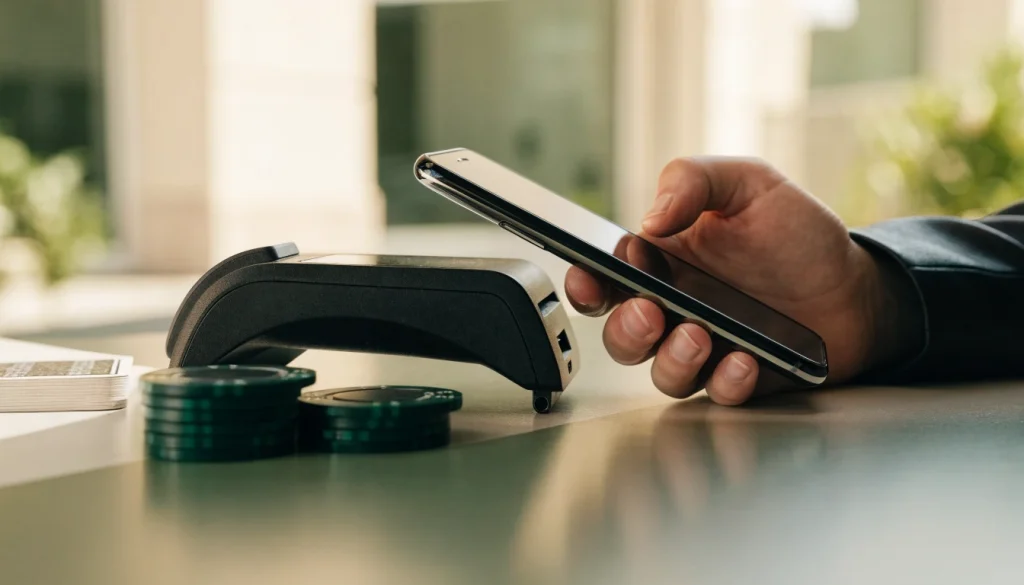
A familiar wallet does not confirm casino acceptance; deposits, withdrawals, legal context and game access each require separate consideration.
Table of Contents
- A Familiar Wallet Is Not a Casino Payment Guarantee
- Deposits: Where Everyday Payment Habits Meet the Cashier
- What a Site’s Payment Options Can—and Cannot—Show
- The Withdrawal Question Has No Verified Google Pay Answer
- The Legal Boundary Around Offshore Casino Payments
- A Payment Method Does Not Determine Which Games Are Available
- Payment Labels Are Not Evidence of Game Compatibility
- Depositing and Withdrawing Are Separate Questions
- Australia’s Wallet Culture Does Not Set Casino Policy
- Google Pay as a Payment Question, Not a Promise
A Familiar Wallet Is Not a Casino Payment Guarantee
Google Pay has become part of ordinary payment life in Australia. Mobile wallets, including Google Pay and Apple Pay, are accepted almost everywhere in the country. That familiarity can make a search for an Australian online casino using Google Pay seem straightforward: if the wallet works across daily purchases, it may seem natural to expect it wherever money changes hands.
But everyday acceptance describes a broad habit, not a rule binding every merchant. A familiar payment icon is not a universal pass. The difference matters especially when a search joins two ideas that sound as though they belong together: an Australian casino and a mobile wallet used by Australians. One describes a payment custom; the other asks about a particular service and its circumstances.
A wallet’s presence in ordinary life does not establish that an online gambling site accepts it. Nor does widespread acceptance of mobile wallets in Australia show that a particular site offers Google Pay to Australian customers. The national pattern is real, but it cannot answer a site-specific question by itself. “Accepted almost everywhere” is a description of the wider payment landscape, not a promise that every online service participates.
Choosing a casino for Google Pay in Australia calls for checking the details that matter to you, such as available payment information and the operator’s stated credentials. Use these short verdicts as a starting point, and verify Google Pay availability directly with each casino.
1. WinSpirit Casino
License: Curacao eGaming OGL/2024/923/0383 (Antillephone N.V.) · Min. deposit: A$30 WinSpirit Casino lists a Curaçao eGaming licence issued through Antillephone N.V. Its minimum deposit is A$30.
2. Neospin
License: Curacao Gaming Control Board OGL/2023/176/0095 (Hollycorn N.V.) Neospin lists a Curaçao Gaming Control Board licence held by Hollycorn N.V.
3. Vegaz Casino
License: Curacao OGL/2024/1335/0780 · Min. deposit: EUR 20 Vegaz Casino lists a Curaçao licence. Its minimum deposit is EUR 20.
4. SpinsUp
License: Curacao Gaming Control Board OGL/2023/174/0082 (Dama N.V.) SpinsUp lists a Curaçao Gaming Control Board licence held by Dama N.V.
5. Thor Casino
License: Curacao – Antillephone N.V. (Versus Odds B.V.) · Min. deposit: EUR 20 Thor Casino lists a Curaçao licence associated with Antillephone N.V. and Versus Odds B.V. Its minimum deposit is EUR 20.
6. 7Bit Casino
License: Curacao, operated by Dama N.V. 7Bit Casino is operated by Dama N.V. and lists Curaçao as its jurisdiction.
7. Uptown Pokies
License: Curacao (operating since 2017) · Min. deposit: A$20 Uptown Pokies lists Curaçao as its jurisdiction and has been operating since 2017. Its minimum deposit is A$20.
8. Roby Casino
License: Curacao eGaming (Roby Games Ltd) Roby Casino lists a Curaçao eGaming licence held by Roby Games Ltd.
9. Kingmaker
Payout speed: crypto ~90 minutes, fiat 1-5 days · Min. deposit: A$30 Kingmaker lists a minimum deposit of A$30. Its stated payout speed is around 90 minutes for crypto and 1–5 days for fiat.
10. Bizzo Casino
License: Curacao Gaming Control Board (TechSolutions Group N.V.) Bizzo Casino lists a Curaçao Gaming Control Board licence held by TechSolutions Group N.V.
That distinction is easy to miss because digital payments are designed to feel seamless. A phone can hold a familiar wallet, and a tap can replace the handling of a physical card. The interface makes the payment method feel portable: the same name, the same screen, apparently the same action. Yet a payment method still depends on the context in which it is offered. Familiarity with the tool does not settle who accepts it or for what service.
This is why phrases such as “Google Pay casino in Australia” can carry more certainty than they deserve. They may sound like a description of an established category, when they are really a combination of separate questions. Is Google Pay common in Australian daily life? Yes. Does that fact establish that a particular online casino accepts it? No. The second answer cannot be derived from the first.
The wording “Australian online casino” also needs care. “Australian” may refer to the people making a search, the audience a service claims to serve, or the place where an operator is based. Those meanings are not interchangeable. A payment method used widely by Australians does not, by itself, make an online gambling service Australian or settle whether it can lawfully offer its services in Australia. The ordinary language of convenience can obscure a more consequential distinction.
There is a small social history in the appeal of a mobile wallet. People become comfortable with a payment tool through repeated use in ordinary settings; it stops feeling like a novelty and becomes part of the background. That public comfort is valuable to businesses because it reduces friction in familiar transactions. But convenience is not a public mandate. No broad consumer habit obliges every merchant, platform or service to adopt the same option.
Casinos That Accept Litecoin in Australia: What to Know
The same gap appears whenever a payment logo is treated as proof. A logo may tell something about a payment route in a particular setting, but it cannot establish every condition surrounding a service. General knowledge about Australian wallets is useful as context, not as evidence about the policies or legal status of an individual gambling site. The distinction is less dramatic than a promise of effortless payment. It is also more accurate.
The careful answer to the question, then, is narrower than the wording may suggest. Mobile wallets such as Google Pay are widely accepted across Australia. That fact says something about everyday payment culture. It does not confirm that an online casino accepts Google Pay for Australian users, and it should not be turned into a claim that such a service is available or appropriate. Familiarity travels easily; permission and acceptance do not.
A wallet can be familiar without being universal. And a familiar wallet is not a casino payment guarantee.
Deposits: Where Everyday Payment Habits Meet the Cashier
A payment habit can travel easily from one part of daily life to another in the imagination. A phone pays for lunch; a card handles a household bill; a bank-linked service moves money between accounts. In Australia, consumers are comfortable switching among cards, mobile wallets and services such as PayPal. That fluency is real. It does not, by itself, establish what appears in any particular gambling site’s cashier.
Attention: A mobile wallet’s familiarity in everyday Australian commerce does not guarantee that a particular online casino cashier supports it for deposits.
The distinction matters because a mobile wallet is not a universal permission slip. Google Pay may be familiar at ordinary points of sale, but a cashier is a separate system, governed by the options its operator makes available and the rules attached to those options. The appearance of a Google Pay icon elsewhere on a phone says nothing conclusive about whether a casino deposit can be made through it.
That can make the deposit question feel oddly simple and oddly difficult at once. A familiar wallet suggests a familiar action: choose a method, confirm a payment, move on. Yet the decisive detail is not the general ease of tapping a phone. It is whether the relevant cashier offers Google Pay for deposits, and whether that option applies to the account and transaction in question. Without that site-level confirmation, “casino deposit via Google Pay” remains a description of a desired route, not evidence that the route exists.
The cashier is where broad consumer habits meet narrow institutional choices. A business can decide which payment methods it supports; a wallet’s widespread everyday use does not compel that business to support it. Nor does support for one mobile wallet necessarily imply support for another. Familiarity may smooth the experience when a method is available, but it cannot fill in a missing option.
Casinos That Accept PayID in Australia: The Evidence
Even the word “deposit” can make the process sound more uniform than it is. It names the purpose of a transaction, not the available method. One cashier may present a different set of choices from another, and a label that appears in general information may not tell the whole story about the payment stage. The important distinction is between a method being common in Australian life and being offered for a particular online transaction. Those are separate claims.
This is also why searches for a small Google Pay deposit amount cannot settle the underlying question. An amount in a search phrase does not prove that a casino accepts the wallet, or that the wallet can be used for that amount. A figure only becomes meaningful within the terms of a specific payment route. Without that route, the number is decoration: precise-looking, but detached from a confirmed process.
There is a cultural reason the assumption is tempting. Australia’s everyday payment landscape has made switching between physical cards, phone-based wallets and bank-linked services ordinary. The technology has receded into habit; the transaction feels almost like a gesture. But convenience in one setting is not a national standard imposed on every merchant, much less on every online cashier. Institutions preserve their own boundaries, often less elegantly than the devices that connect them.
A Google Pay deposit therefore involves two different ideas that are easy to collapse. One is the wallet as a familiar consumer tool. The other is the cashier as a controlled menu of payment choices. The first may explain why a deposit through Google Pay sounds plausible. It cannot establish the second. A site’s own payment information is needed to determine what it actually offers; general comfort with mobile wallets cannot substitute for that information.
Do
- Check the site’s own payment information
- Look for explicit identification of Google Pay
- Verify if the method applies to your location
Don’t
- Assume acceptance based on general wallet popularity
- Treat “mobile payments” as a synonym for Google Pay
- Rely on general consumer habits as proof of policy
The same caution applies to broad labels such as “mobile payments.” They can group together services that differ in how they work, how they are presented and where they are accepted. Treating the category as interchangeable with Google Pay turns a general trend into a specific claim. The convenience of a category is not proof of a particular method.
For a question about funding an account, then, the relevant boundary is modest but important: Australian consumers’ ease with digital payments describes consumer culture, not casino policy. It explains why a phone-based deposit might seem natural. It does not identify a casino that accepts it, establish that a deposit can be completed, or justify assuming that the cashier will display Google Pay.
Everyday payment habits travel. Acceptance does not.
What a Site’s Payment Options Can—and Cannot—Show
Australia’s familiarity with mobile wallets is a broad feature of everyday commerce: Google Pay and Apple Pay are accepted in nearly every part of the country. That tells something about local habits, but little about the payment policy of any particular gambling website. A familiar logo on a screen is not a national guarantee.
Casino Sites and Osko in Australia: What Is Verified
A site’s payment page is therefore more useful than assumptions drawn from the high-street experience, but it still needs to be read with care. A list of payment brands may describe methods available somewhere in the service, rather than confirming that each one is available to every customer. The wording matters. “Supported payment methods” makes a different claim from a logo displayed without explanation, and neither should be stretched beyond what it actually says.
The detail that matters is whether Google Pay is explicitly identified as an available option for the relevant account and location. A reference to “digital wallets” is broader and less conclusive. It may describe a category rather than name a service. Likewise, a general statement that a site accepts mobile payments does not establish that Google Pay is among them. Specific language narrows the claim; vague language leaves room for interpretation.
This is less a technical puzzle than a problem of institutional language. Payment pages are written to summarise a system, while people looking at them want a clear yes or no. Between those two purposes sit labels, symbols and carefully broad phrases. The page may be accurate on its own terms while still failing to answer the precise question being asked.
Casinos That Accept POLi in Australia: Legal Limits
A logo can be especially persuasive because it borrows trust from ordinary life. Google Pay works as a recognisable name in shops and services across Australia; seeing it beside a casino brand can make the association feel settled. But the logo may be decorative, may refer to a general business offering, or may not spell out whether the method is available to Australian customers. Its presence is a clue to inspect, not proof to rely on.
The same distinction applies to claims about a “best” site. A polished payment page, a long list of methods or prominent wallet branding does not establish that one casino is better than another, nor does it confirm that Google Pay is accepted. Those are separate judgments. Payment information can describe what a business says it supports; it cannot, by itself, turn that statement into a comparison or endorsement.
A useful reading separates three things: the method named, the customers covered by the claim and the action the method is said to support. If a page only names mobile wallets collectively, it has not named Google Pay. If it names Google Pay without saying which customers qualify, the Australian position remains unclear. And if it describes a method in one context, that does not automatically settle its role elsewhere. Each sentence has a boundary.
There is also a difference between a site’s own payment information and outside descriptions of it. A third-party summary may repeat an older claim, compress several methods into one category or omit a qualification. That does not make it useless, but it makes precision more important: the wording should be checked against the site’s current account of its options rather than treated as a standing promise.
The careful conclusion is modest. Australia’s broad acceptance of mobile wallets explains why Google Pay seems like a natural thing to look for. It does not tell whether a particular casino accepts it. Site-level language can narrow the question, but only a direct, specific statement about Google Pay and Australian customers can answer it. A familiar symbol is still only a symbol.
Casinos that accept Visa in Australia: what is known
The Withdrawal Question Has No Verified Google Pay Answer
A payment button at the deposit stage answers a narrow question: whether the cashier will accept a particular way of putting funds into an account. It does not settle the separate question of how winnings can leave it. The two movements may look like opposite halves of one transaction, but an operator can treat them under different rules.
That distinction matters when a Google Pay search turns towards withdrawals. A site displaying Google Pay as a deposit option would not, by that fact alone, establish that it returns money through the same wallet. Nor would the presence of a Google Pay logo establish that a withdrawal is available, approved or completed instantly. A deposit route is not a withdrawal promise.
That leaves no basis for calling a Google Pay casino withdrawal instant, or for describing a particular site as an instant-withdrawal option. The wording may be common in searches for real-money play and pokies, but familiarity with the phrase cannot supply the missing operational detail. A persuasive label is still only a label.
Casinos That Accept Mastercard in Australia: What’s Verified
The distinction is easy to miss because wallets are designed to make paying feel like a single, seamless act. In ordinary life, a phone can stand in for a card at the counter; the screen hides much of the system behind it. Gambling transactions expose the less seamless arrangement. A cashier may accept one route for deposits while its rules for returning funds follow another path, or do not include that route at all.
There is also a verification stage in the background. Online casinos commonly ask customers to complete identity checks before carrying out financial transactions. That requirement concerns the account holder’s identity; it does not establish that Google Pay can be used to receive a withdrawal, or tell how long any payment might take. These are separate questions, however often a page makes them appear to be one.
The useful distinction is therefore between a method appearing in a deposit menu and a confirmed withdrawal facility. Even a deposit that goes through says nothing, by itself, about the available route for later funds. A site’s terms may describe its own payment procedures, but a general wallet label cannot be read as evidence of every stage of a transaction.
Online casinos often require identity verification checks before carrying out financial transactions, regardless of the payment method used.
This is why claims built around “instant Google Pay withdrawals” deserve particular care. “Instant” is a claim about timing, while “Google Pay” is a claim about the payment channel; each needs its own support. One does not prove the other.
For Australian readers, the question is not merely whether a wallet can be used to pay. It is whether a particular withdrawal route is expressly available and what conditions govern it. The deposit and withdrawal sides remain distinct. A logo cannot close the gap.
The Legal Boundary Around Offshore Casino Payments
A payment logo can make a site appear locally familiar; it cannot make the service lawful. In Australia, the legal question comes before the choice between Google Pay, a card or another way to move money. The Interactive Gambling Act 2001 places the restriction on operators: providing real-money online casino games to people in Australia is unlawful. That covers casino-style services, not merely the means by which an account might be funded.
The distinction matters because searches for Australian casinos that accept Google Pay can frame the issue as a cashier preference. Yet whether an offshore site displays a wallet option is separate from whether it may offer its gambling service to people physically in Australia. A familiar payment brand does not grant an operator permission to do so, nor does it turn an offshore casino into a locally regulated one. Payment technology crosses borders with little ceremony; legal authority does not.
BPay Casino Sites in Australia: What Is Verified
The law does not explicitly make an individual player’s use of an offshore casino a criminal offence. That is not the same as approval, protection or a reliable remedy if something goes wrong. Australian consumer law does not protect people who use offshore casinos. The absence of a player offence therefore should not be mistaken for the protections that accompany a lawful local consumer transaction. A narrow distinction in the law is not a safety net.
Enforcement sits with the Australian Communications and Media Authority, or ACMA, which is responsible for administering the Interactive Gambling Act. Its role concerns the law’s restrictions on prohibited services. A site’s payment page, promotional language or statement about accepting customers does not override those restrictions. Nor does the presence of a payment route amount to an Australian endorsement. The cashier is not a licence.
This makes “casino pay with Google Pay” an incomplete description of the situation in Australia. The method may be widely familiar in ordinary commerce, but that familiarity says nothing about the legality of an online casino’s offer. The relevant boundary is set by the service and the law, not by the convenience of a wallet button. A site may describe itself as offshore, but that label does not erase the Australian rules governing services offered to people here.
The distinction is especially important where a payment method gives a site the appearance of an ordinary retail transaction. A contactless wallet is part of daily life; a real-money casino service is treated differently under Australian law. The payment interface may look routine while the underlying activity remains prohibited for operators offering it to people in Australia. Familiarity is not authorisation.
Legal Warning
Under the Interactive Gambling Act 2001, providing real-money online casino games to people in Australia is unlawful, and users of offshore casinos are not protected by Australian consumer law.
The legal position is therefore neither a recommendation to use offshore sites nor a claim that players face the same statutory prohibition as operators. It is a boundary: the Act targets the provision of online casino games to Australians, and ACMA enforces that framework. People using offshore casinos are outside the protection of Australian consumer law. The wallet does not change either point.
A Payment Method Does Not Determine Which Games Are Available
A cashier and a game catalogue answer different questions. The cashier describes how an account might be funded; the catalogue describes what a service offers. Seeing Google Pay mentioned beside a casino’s payment information would not, by itself, establish that any particular game can be played using it. Payment methods do not attach themselves to individual titles like labels on jars.
That distinction matters because the phrase “Google Pay casino games” can suggest a special class of games built around the wallet. There is no basis for treating it that way. Google Pay is a payment method, not a game format, software provider or marker of a title’s features. A mobile casino interface may place payment information and entertainment content close together, but screen proximity is not evidence of a connection.
Casinos That Accept Neosurf in Australia: What to Know
Nor does a payment option establish the scope of a catalogue. The presence of a wallet in a cashier would say nothing about which content is listed, whether it is available to a particular account, or whether it can lawfully be offered in Australia. Those are separate matters, governed by the service’s own arrangements and, in Australia, by the legal boundary around online casino services. A convenient interface cannot settle either question.
The reverse inference is just as weak. A catalogue cannot confirm that a particular payment route is accepted. A game page, category label or mobile layout is not a payment confirmation, and a wallet logo is not a promise about what can be accessed through it. The two details need their own evidence.
This is why claims about Google Pay-compatible games should be read narrowly. Unless a site clearly connects a named payment method with specific content—and the arrangement is lawful for the person’s location—the association remains an assumption. No particular game or category is established here as compatible with Google Pay. The honest answer is less theatrical than a list of titles, but more useful: payment and content are separate questions.
CashToCode Casinos in Australia: What Is Verified
There is also a difference between technical possibility and permission. A service may display features or payment information without that display making its underlying offer lawful in Australia. Online casino games are prohibited services when offered to people in the country; a wallet does not alter that status. Nor does describing a mobile casino as accessible turn access into authorisation.
The tidy little label does not do the work. A payment method tells only part of the story.
Payment Labels Are Not Evidence of Game Compatibility
A payment label and a game category answer different questions. Google Pay describes a way of moving money; a reference to pokies describes content. Placing the terms side by side does not make one a feature of the other. A page titled around Google Pay and casino games may be using familiar words together, but the wording alone cannot establish that a particular category is available through that payment method.
The distinction matters because labels are often treated as if they were a single promise. “Pay by Google Pay” concerns a transaction route. It says nothing, by itself, about the games a service provides, the terms attached to them or whether a particular activity is lawful in Australia. A payment method does not carry a catalogue in its digital wallet.
The same separation applies to bonuses. A phrase linking Google Pay with a casino bonus may describe a promotion, a payment condition or simply a cluster of terms on a page. Without the actual terms, the phrase cannot show that a bonus exists, that Google Pay qualifies for it or that any particular game is included. Those are separate conditions, not interchangeable pieces of marketing language.
This is especially important in Australia, where the legal setting is not a footnote to casino terminology. The Interactive Gambling Act 2001 prohibits operators from providing real-money online casino games to people in Australia. A payment label does not change that boundary, and promotional wording does not turn prohibited services into permitted ones.
EcoPayz Casino Sites in Australia: What to Check
There is a small cultural irony in the way payment brands acquire extra meanings. A familiar wallet can suggest ease, modernity and ordinary retail life; attached to a game or bonus label, it may seem to promise a seamless package. But the impression comes from grammar, not evidence. Two terms sharing a heading remain two terms.
A catalogue, a payment route and an offer each have their own conditions and legal implications. Combining their names does not settle any of them. The label is only a label.
Depositing and Withdrawing Are Separate Questions
A payment method can appear at one end of an account’s money flow without being available at the other. That distinction matters whenever a casino payment option is described simply as “supported”: the word may refer to funding an account, returning money, or both. Those are separate arrangements, not two automatic halves of one transaction.
Google Pay’s presence in a payment menu would therefore not, by itself, establish that winnings could be sent back through the same route. A cashier might distinguish between ways to add funds and ways to receive them; its labels may also be broad enough to leave the scope unclear. The practical question is not merely whether Google Pay is named, but what the stated support covers.
Bitcoin Casinos in Australia: Legal Limits and Payments
This is a familiar asymmetry in payment systems. A purchase can be authorised through a wallet that does not function as a destination for refunds or transfers. The wallet’s role depends on the service and its arrangements with payment providers. Everyday familiarity with tapping a phone cannot settle those arrangements for a gambling account.
Nor does the appearance of Google Pay beside other methods establish that every listed option works in both directions. Payment menus are not necessarily mirrors. A site’s general claim of wallet acceptance should not be read as a promise about how money can leave an account, and a deposit route should not be treated as a withdrawal route by implication.
The distinction is especially important in searches about a casino withdrawal through Google Pay: the phrasing can make the method sound like a single, settled feature. In reality, “Google Pay accepted” is too imprecise to answer whether it applies to deposits, withdrawals, or only one of them. A clear statement would need to specify the direction of payment.
Summary of Payments
- Deposit and withdrawal routes are separate and not necessarily identical
- A “supported” label may only refer to one direction of money flow
- National wallet culture does not dictate individual casino policy
- Familiarity with a payment tool is not a guarantee of its acceptance
For Australian readers, this is a question of interpreting payment claims, not a reason to treat offshore casino services as an ordinary consumer option. The legal position remains separate from the cashier’s wording. A label does not alter it.
Two routes. Not one.
Australia’s Wallet Culture Does Not Set Casino Policy
Australian payment habits are flexible. People are comfortable moving between cards, mobile wallets and bank-linked services such as PayPal, choosing among them according to the task at hand. That familiarity makes Google Pay feel like part of ordinary financial life rather than a novelty. It does not, however, dictate what any individual gambling site allows.
The distinction is easy to miss because the same wallet can appear across many everyday settings. A payment method’s presence in shops and other services can create an expectation that it will travel neatly into every online cashier. But consumer comfort is a social habit; a site’s payment rules are a separate decision. One does not establish the other.
Casinos That Accept Tether USDT in Australia: Legal Context
That is why the phrase “Google Pay casino Australia” can carry more certainty than the underlying situation warrants. It may describe a hoped-for combination, not a confirmed one. Whether an Australian casino accepts Google Pay cannot be inferred from the wallet’s broad use in the country, or from the fact that people already switch between mobile payments, cards and bank-linked services.
There is a small irony in the modern wallet: it is designed to make payment feel continuous, while the institutions accepting it remain distinctly particular. A familiar button does not make every service part of the same system. A casino using Google Pay would need to make that method available in its own payment arrangements; national familiarity cannot make the choice on its behalf.
This local comfort is useful context, not proof. It explains why Australians may expect a mobile wallet to be an ordinary option, and why searches for an Australian casino with Google Pay sound plausible. It says nothing conclusive about any particular site’s policy. The habit belongs to consumers. The decision belongs to the service—and those are not interchangeable facts.
Casinos That Accept Neteller in Australia: Evidence
In Australia, cards, mobile wallets and bank-linked services sit comfortably alongside one another in daily life. That culture can shape expectations, but it cannot turn expectation into acceptance. A wallet may feel familiar. The policy remains individual.
Google Pay as a Payment Question, Not a Promise
In Australia, paying by phone has become an ordinary part of daily commerce. Google Pay and Apple Pay are available at retailers across the country, alongside contactless cards. That familiarity explains why the same wallet might seem a natural fit for an online casino. It does not establish that any particular casino accepts it.
The distinction is small in wording and large in consequence. A wallet’s reach among Australian shops says something about local habits and payment infrastructure; a gambling site’s cashier reflects that operator’s own arrangements. One cannot stand in for the other. A casino may mention mobile payments generally without identifying Google Pay, or display a method that is not available to every customer. The label deserves precise reading.
So the question of whether Google Pay can be used at a casino in Australia has no universal answer. General acceptance of the wallet in the country cannot settle what an individual site supports. Nor does a familiar logo amount to a promise that a payment will work in every circumstance. That is the whole distinction.
There is also a legal boundary that changes how this subject should be read. Australian law prohibits operators from providing real-money online casino games to people in Australia. Australian consumer law does not protect players using offshore casinos. A payment method’s presence should not be mistaken for approval, protection or a safe route into gambling.
The sensible conclusion is deliberately modest: Google Pay is common in Australian everyday spending, but that fact alone cannot confirm its availability at an online casino. Familiarity is not evidence. A wallet remains a payment method, not a guarantee.
How can I check whether a casino accepts Amex deposits?
Check the casino cashier for American Express as a deposit option. Some Australian casinos support Amex deposits, including Jackpot City Casino, Spin Palace and Ruby Fortune.
What should I do if my American Express deposit is declined?
Check with your card issuer, as Amex or an Australian bank may block gambling payments to a particular website. You can also check whether American Express is available in the casino cashier.
Does American Express work for online casinos?
Yes, some Australian online casinos accept Amex deposits, but not all do. Amex deposits are processed instantly, while casino withdrawals to Amex may take up to five days and may not be available at every casino.
What fees are involved with American Express payments?
Amex deposits typically have no fee, but a casino may add a 1.5% surcharge. A 3% currency conversion fee may apply to Amex cards, and withdrawals may carry a fee.
Are there fees for using Amex at online casinos?
Deposits are typically free, but a casino may charge a 1.5% surcharge. Currency conversion can incur a 3% fee, and withdrawal fees may also apply.
Payments

Anonymous Crypto Casinos in Australia: Privacy Limits
Bitcoin can change how deposits move, but it does not guarantee anonymity or remove legal,...

Aussie Crypto Casinos: Deposits and Account Rules
A practical look at crypto balances, account rules, access, verification claims and the limits of...

Australian Online Casino Payment Methods Explained
Bank rails, intermediaries and withdrawal conditions shape how deposits move, while payment access does not...

Casino Sites That Accept Amex in Australia: What to Know
Amex availability can vary by casino and bank, while the Interactive Gambling Act 2001 restricts...

BPay Casino Sites in Australia: What Is Verified
BPay searches often outpace the available evidence, and payment options do not change the legal...

Australian Casino Sites That Accept Credit Cards
Card availability can vary by cashier, while Australian law focuses on whether real-money casino games...

EcoPayz Casino Sites in Australia: What to Check
The guide separates what can be verified about EcoPayz deposits and withdrawals from legal limits...

Casino Sites and Osko in Australia: What Is Verified
Osko availability does not establish that an offshore operator may lawfully offer real-money casino games...

Paysafecard casino sites in Australia: what claims show
Australian online casino access does not establish lawful service, verified Paysafecard support, or withdrawal availability....

Skrill Casinos in Australia: What the Evidence Shows
The available evidence does not confirm specific Australian-facing casinos, pokies titles or withdrawal routes linked...

Trustly Casino Sites in Australia: What to Check
A Trustly payment option does not establish that an offshore casino is authorised to serve...

Casinos That Accept Apple Pay in Australia
The guide distinguishes everyday wallet use from deposits, withdrawals, game-specific routes and evidence of payment...

Bitcoin Casinos in Australia: Legal Limits and Payments
The payment method, casino terms and service offered each matter, but Bitcoin does not change...

Bitcoin Cash Casinos in Australia: Legal Checks
BCH acceptance is only one part of the picture: Australian rules focus on the operator,...

CashToCode Casinos in Australia: What Is Verified
Available evidence may not confirm CashToCode acceptance, while deposits, withdrawals and an operator’s legal status...

Casinos That Accept Ethereum in Australia
A look at Ethereum payments alongside familiar Australian payment methods, with attention to what can...

Casinos That Accept Litecoin in Australia: What to Know
The Interactive Gambling Act 2001 concerns the real-money casino service offered, not whether a site...

Casinos That Accept Mastercard in Australia: What’s Verified
The legal position on offshore casino services is distinct from payment access, and the available...

MiFinity Casinos in Australia: Acceptance and Legal Limits
A practical look at acceptance evidence, withdrawal routes and the legal distinction between offshore operators...

Casinos That Accept Neosurf in Australia: What to Know
Australian terminology, online gambling and payment acceptance are separate questions; search wording cannot establish that...

Casinos That Accept Neteller in Australia: Evidence
The available information describes broad Australian payment habits but does not confirm casino names, Neteller...

Casinos That Accept PayID in Australia: The Evidence
PayID availability, casino legality and withdrawal evidence are separate questions; familiar Australian payment habits do...

PayPal Casinos in Australia: Legal and Payment Context
PayPal availability does not establish Australian licensing, and payment details require casino-specific verification. The Legal...

Casinos That Accept POLi in Australia: Legal Limits
POLi, cards and bank transfers describe payment routes, not whether an operator may offer online...

Casinos That Accept Tether USDT in Australia: Legal Context
The guide distinguishes offshore payment descriptions from Australian legal restrictions and explains what cannot be...

Casinos that accept Visa in Australia: what is known
A card brand comparison does not confirm availability for every casino account or show whether...

Instant Bank Transfer Casinos in Australia: What to Know
PayID and bank wires may move money differently, but familiar payment methods do not make...

New PayID Pokies in Australia: Payments Explained
PayID uses an identifier to route bank transfers through the NPP, but it does not...

Online Pokies PayID Australia: Deposits Explained
A practical look at deposit flows, cashier conditions, withdrawal timing, and the limits of claims...

Pay by Phone Casinos in Australia: How It Works
A mobile number can identify a bank payment without billing a carrier account, while casino...

Solana Casino Comparison for Australia
A practical comparison of wallet transfers, casino processing, playthrough terms and the limits of Solana-based...


































































































































































































