
Real Money Casino Table Games in Australia
 Available in AU
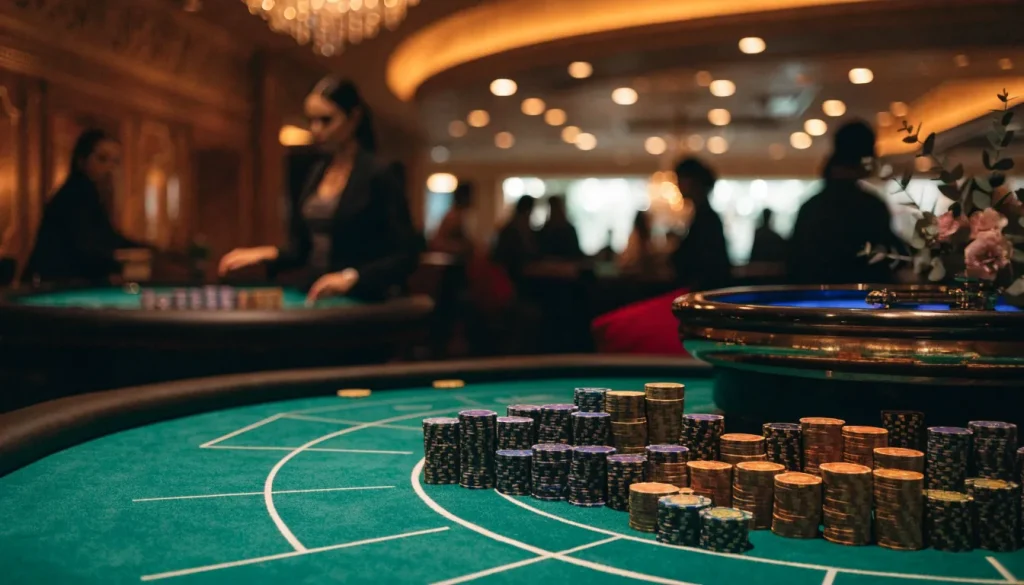
Live streams show events at a physical table, while RNG games display outcomes determined by software.
Table of Contents
- How Online Tables Recreate a Casino Floor
- The Dice, the Dealer and the Shape of a Hand
- What Australian Law Allows—and Where It Draws the Line
- Table Games, Beyond the Name
- A Table Is a Family of Different Games
- Cards, Hands and the Banker’s Side
- Roulette’s Zeroes and the Rules They Imply
- Poker at the Table: A Contest of Hands
- Odds Without a Reliable Ranking
- Bitcoin, Live Dealers and the Difference in How Outcomes Are Set
How Online Tables Recreate a Casino Floor
An online table can look like a single thing: a game presented on a screen, with cards, a wheel or a dealer in view. Yet the image conceals two different ways of producing an outcome. In one, a real dealer works with real casino equipment while a live video stream carries the scene to players. In the other, software uses a Random Number Generator (RNG) to determine what happens, such as which cards are dealt or where a roulette ball lands.
That difference is more than a matter of scenery. It changes what the screen is showing. A live-dealer game transmits an event taking place at a physical table. An RNG-based game displays the result of a process determined by software. Both may borrow the familiar furniture of casino table games, but only one puts a dealer and equipment in front of a camera.
A room carried by video
The live-dealer format keeps the dealer’s work visible. Real equipment is used, and the action is streamed to players. The screen therefore acts as a window onto a physical setting, rather than merely illustrating a result generated elsewhere. The dealer is not an animated figure or a decorative voice; the defining feature is the presence of a real person handling the game at a real table.
Choosing a real-money casino for table games in Australia calls for checking the operator details that are available before you play. This list offers a concise reference to each selected operator, based only on the information provided.
1. WinSpirit Casino
License: Curacao eGaming OGL/2024/923/0383 (Antillephone N.V.) · Min. deposit: A$30 WinSpirit Casino is listed with a Curacao eGaming licence, OGL/2024/923/0383, issued through Antillephone N.V. Its stated minimum deposit is A$30.
2. Neospin
License: Curacao Gaming Control Board OGL/2023/176/0095 (Hollycorn N.V.) Neospin is listed with a Curacao Gaming Control Board licence, OGL/2023/176/0095, held by Hollycorn N.V.
3. Vegaz Casino
License: Curacao OGL/2024/1335/0780 · Min. deposit: EUR 20 Vegaz Casino is listed with Curacao licence OGL/2024/1335/0780. Its stated minimum deposit is EUR 20.
4. SpinsUp
License: Curacao Gaming Control Board OGL/2023/174/0082 (Dama N.V.) SpinsUp is listed with a Curacao Gaming Control Board licence, OGL/2023/174/0082, held by Dama N.V.
5. Thor Casino
License: Curacao – Antillephone N.V. (Versus Odds B.V.) · Min. deposit: EUR 20 Thor Casino is listed with a Curacao licence through Antillephone N.V., with Versus Odds B.V. named. Its stated minimum deposit is EUR 20.
6. 7Bit Casino
License: Curacao, operated by Dama N.V. 7Bit Casino is listed as a Curacao-licensed casino operated by Dama N.V.
7. Uptown Pokies
License: Curacao (operating since 2017) · Min. deposit: A$20 Uptown Pokies is listed as operating under a Curacao licence since 2017. Its stated minimum deposit is A$20.
8. Roby Casino
License: Curacao eGaming (Roby Games Ltd) Roby Casino is listed with a Curacao eGaming licence, with Roby Games Ltd named.
9. Kingmaker
Payout speed: crypto ~90 minutes, fiat 1-5 days · Min. deposit: A$30 Kingmaker lists crypto payouts at approximately 90 minutes and fiat payouts at 1–5 days. Its stated minimum deposit is A$30.
10. Bizzo Casino
License: Curacao Gaming Control Board (TechSolutions Group N.V.) Bizzo Casino is listed with a Curacao Gaming Control Board licence, with TechSolutions Group N.V. named.
A casino floor has always been a social arrangement as much as a collection of games. The dealer occupies a recognised place, equipment gives the action a shared focus, and participants follow the same unfolding event. Streaming carries some of that arrangement into a remote setting. The room itself does not travel, but the dealer’s visible activity does.
That is a modest kind of imitation. A screen can transmit the table; it cannot turn the viewer’s surroundings into the casino floor. The physical room remains elsewhere, and the stream is the connection between it and the person watching. The distinction matters because the live image is not proof that every online table works in this way. A video feed and a software-generated outcome are different things, even when both are presented within a similar digital interface.
A table represented by software
In an online version governed by an RNG, software determines the outcome. The screen may show cards being dealt or a ball appearing to land on a roulette number, but those images belong to a digital presentation of the game. They do not show a real dealer producing that result with physical equipment.
The distinction is easiest to see by separating the visible scene from the mechanism behind it. A card on a screen can resemble a card on felt; a displayed wheel can resemble a wheel in a room. Appearance supplies a familiar language, while the outcome comes from the RNG. The software is not a hidden dealer. It is the means by which the result is determined.
Mines Casino Game in Australia: What to Verify · Five-Reel Slots in Australia: Bonuses and RTP
That does not make the presentation meaningless. Familiar objects help make a game legible: cards are recognisable as cards, and a wheel remains a wheel in the imagination even when represented digitally. But a resemblance should not be mistaken for a shared process. The virtual table and the streamed table may use similar imagery while differing in what is physically happening.
The importance of knowing what is on screen
For anyone describing online casino table games, “live” and “digital” are not interchangeable labels. A live-dealer format has a real dealer and real equipment, with the action sent by video. An RNG-based format has outcomes selected by software. The first transmits a physical event; the second renders a game whose result is determined electronically.
That distinction also clarifies the language of the online casino. “Table” can refer to the visible design, the procedure of a game, or an actual piece of equipment. On a screen, these meanings can sit close together. A digital table may look social without showing a shared physical room; a live stream may show a room while remaining remote to the person watching. The image encourages continuity. The mechanism does not always provide it.
There is no need to treat one format as a more authentic version of the other. They reproduce different parts of the casino-floor experience. Live streaming preserves the dealer’s presence and the use of physical equipment, while an RNG-based presentation preserves the game’s visual grammar through software. One offers a transmitted scene; the other offers a digital representation.
Live-dealer games transmit a physical event with real equipment, while RNG-based games render a digital representation determined by software.
A small distinction, with large consequences for what the screen means.
The Dice, the Dealer and the Shape of a Hand
A table game is not defined only by its equipment. Its central question is who or what a player is measuring against: a dealer, another player’s hand, or the result of a roll. That difference shapes the action around the table. It also gives each game its own small social order, with turns, decisions and moments when uncertainty becomes visible.
In blackjack, the player’s contest is with the dealer. The aim is to finish with a hand value closer to 21 than the dealer’s hand. The dealer is therefore not merely a person distributing cards; the dealer occupies the opposing side of the game. Attention gathers around the comparison between two totals. Each hand becomes a compact contest, with the target fixed and the other side’s result still to come.
That structure differs from a contest between players. The dealer’s role gives the table a clear centre: one person administers the game and also represents the hand against which the player’s result is judged. The appeal is easy to understand without knowing every rule. The question is whether one hand will come closer to the stated target than the other. The whole drama fits in a comparison.
Poker draws its tension from a different source. Players compete with one another to build the best possible hand. The dealer may be part of the table’s procedure, but the defining contest is among the players, whose hands are set against each other. A poker table is consequently a gathering of individual efforts, each directed toward the same broad aim. The hand is both the object being assembled and the basis on which the contest turns.
Crash casino games in Australia: access and risk · 7-Reel Slots in Australia: Layouts and Game Rules
That shared aim creates a particular kind of attention. In blackjack, the dealer’s hand is the point of comparison; in poker, the other players are. Poker’s social character is not an ornament added to the rules. It follows from the fact that the players are rivals in the same contest, each trying to make the strongest hand. The table holds several competing intentions at once.
Dice games make the object of attention smaller still: a pair of dice and the outcome of their roll. Players roll the pair and bet on what will result. Unlike the hand-building contest of poker, the action is not described as assembling a hand; unlike blackjack, it is not framed as getting closer to a target than the dealer. The roll supplies the event around which the bets gather.
There is an old human instinct in that arrangement. A pair of dice turns chance into something everyone can watch at once: two small objects, a single roll, and an outcome to which players have attached their bets. The rules may specify what counts, but the basic scene needs little explanation. The dice are thrown; the table waits.
These formats are often grouped under the same broad label, yet their underlying contests are markedly different. Blackjack is a comparison with the dealer, poker a struggle to make the strongest hand against other players, and dice play a wager on the result of a roll. Knowing that distinction is a useful beginning to understanding what happens at a table. No elaborate theory required.
Blackjack
A contest against the dealer where the aim is to finish with a hand value closer to 21.
Poker
A competition between players to build the strongest hand.
Dice Games
A wager on the result of a roll of a pair of dice.
What Australian Law Allows—and Where It Draws the Line
The phrase “casino near me” suggests a question of distance: which venue is closest, and what can be played there? For online table games, however, geography is not merely a matter of convenience. Australian law draws a boundary around who may provide real-money interactive casino services to people in the country.
The central statute is the Interactive Gambling Act 2001. Its Section 5 prohibits operators based in Australia from offering residents real-money interactive casino games. In practical terms, a locally based company cannot treat an online casino as an ordinary extension of a physical venue. A screen may remove the need to travel, but it does not remove the legal character of the service.
That boundary belongs to a broader rule. The Act governs online gambling services and bars local companies from operating online casinos for Australian customers. The restriction concerns the provision of the service, not simply the branding or the location of a website’s server. A company cannot make a prohibited offer lawful by presenting it as a convenient way to find table games nearby.
The regulator responsible for enforcing the law is the Australian Communications and Media Authority, or ACMA. Its role includes acting against non-compliant platforms and blocking unlicensed domestic services. Enforcement gives the statute a practical edge: the law is not only a statement about what operators should do, but a framework under which access to unlawful services can be interrupted.
Safe Online Pokies Australia: Bitcoin Risks
There is a telling contrast between the language of convenience and the language of regulation. Search terms about the nearest casino evoke a map, a route and a door. The online version seems to promise that all three can be replaced by a link. But Australian law treats the question differently: the important distinction is not how close a service feels, but whether its operator is permitted to offer real-money interactive casino games to people here.
That does not make the law a guide to the location or opening arrangements of physical casinos. Nor does it turn an online table into a lawful local service simply because the interface resembles a casino floor. The statute addresses the provision of interactive gambling; it is not a directory of nearby venues.
The legal line is therefore drawn at the operator and the service. A locally based operator offering real-money online casino play to Australian residents falls on the prohibited side of it, while ACMA is the body tasked with enforcing compliance and blocking unlawful domestic platforms. For a country where “near me” is often a useful practical instruction, the online casino question has a less geographic answer. The map is not the point.
Table Games, Beyond the Name
A casino table game is not defined by a particular set of cards, a wheel or a pair of dice. The broader label describes a way of arranging play: participants gather around a table, follow a shared procedure and, in some formats, take part under a dealer’s direction. The table is both a surface and a small social institution. It gives the game a centre, assigns people places around it and makes the sequence of play visible.
Table Game
A way of arranging play where participants gather around a table, follow a shared procedure, and often act under a dealer’s direction.
That definition is deliberately wider than any one game’s rules. Rules determine what counts as a legal move, how a round proceeds and how its result is settled. The category tells something more basic: play is organised around a common structure rather than being simply an individual interaction with a screen. Different games can therefore belong to the same family while asking participants to do quite different things.
The dealer is one possible organising figure, not a universal requirement. In a live-dealer format, a real dealer uses real casino equipment, with the action streamed to players. The human presence matters to the shape of the encounter: a person carries out the procedure, while the table provides its setting. But the word “table” does not by itself say whether a game is physical or digital, nor does it supply the rules of play. A label is not a manual.
The category also reflects an old social habit. Tables gather attention. People face a shared centre, watch the same proceedings and understand that their actions belong to a common sequence. Even when the participants are not physically together, the language of the table preserves that arrangement. It suggests a public, ordered form of play, rather than a private calculation made in isolation.
This is why “table games” should not be treated as a synonym for one familiar contest. The phrase names a setting and a procedure before it names any particular mechanic. A dealer-led game, a game governed by a shared sequence, and a contest whose participants act around the same table may all fit the broad description; their individual rules remain distinct. The category is a map, not the territory.
Aristocrat Online Pokies in Australia: What to Know · Best Pokie Machines to Play in Australia: A Guide
That distinction matters when the term appears in descriptions of casinos or their systems. A table-game label can identify a broad area of activity, but it cannot establish what a particular game permits, how its outcome is determined or what conditions govern participation. Those questions belong to the specific game and its setting. The shared label does not answer them.
The table, in other words, is a piece of social architecture. It arranges bodies, attention and procedure. The game supplies the particulars. A modest distinction, but a useful one.
A Table Is a Family of Different Games
The phrase “table game” sounds like a neat category, but it gathers together several different social arrangements. Some organise attention around a wheel, some around cards, and others around a shared wager on a result. The table is the common setting, not a promise that the games work alike.
Roulette is built around a wheel and a spread of numbered spaces. Its familiar versions include European, French and American roulette. The names mark different forms of the game, rather than different kinds of table altogether. A wheel gives the game its visual centre: players’ attention moves between the layout and the result, while the procedure remains recognisable across versions.
Blackjack belongs to the card-game family, but its contest is between each player and the dealer. The aim is to finish with a hand value closer to 21 than the dealer’s. That simple description puts it at a different angle from games in which players chiefly measure their hands against one another. The dealer is not merely scenery.
In blackjack, the dealer is the opposing side of the game, whereas in other formats, the dealer may simply be part of the table’s procedure.
Another card-based format is organised around wagers on the player’s hand, the Banker’s hand, or a tie. The choice of what to back is central to its shape. It is often described as baccarat-style betting, a label that points to the competing sides without making it the same contest as blackjack. A small distinction in the object of a wager changes the whole social grammar of a table.
Dice games make chance visible in another way. In one familiar format, players roll a pair of dice and bet on the outcome. The dice are shared objects, and the result arrives in the open; the table’s attention gathers around a throw rather than a hand or wheel. Even within this broad category, the basic image says little about the specific rules.
Poker shifts the focus back to cards, but its defining contest is among players trying to build the best possible hand. It therefore differs from blackjack’s dealer-facing contest and from betting on a named side or result. The cards are common equipment; the relationships they organise are not.
Taken together, roulette, blackjack, baccarat-style betting, dice games and poker give a useful sense of the range, not an exhaustive catalogue. A casino table-games list can be grouped by its central object—the wheel, cards or dice—or by the way participants relate to one another. Neither approach makes one format a universal favourite. The table is only the beginning.
Pokies & Games: Slots and Casino Game Types
Cards, Hands and the Banker’s Side
Card-based casino table games can look similar across the felt while asking players to follow different contests. In blackjack, the comparison is direct: each player tries to make a hand whose value is closer to 21 than the dealer’s. The dealer is not merely a source of cards but the opposing side of the game. That simple arrangement gives the table its shape: a hand is measured against one other hand, and the target is stated plainly.
Baccarat-style betting shifts attention from building a hand to choosing which hand will prevail. Bets may be placed on the player’s hand, the Banker’s hand or a tie. The Banker is therefore not just a person managing the table; the word names one of the sides on the betting layout. The distinction matters. Blackjack frames the action as a contest against the dealer, while this other card format presents several possible outcomes for a wager.
Lightning Link Online Pokies in Australia: What to Know
The contrast is useful when speaking broadly about casino card table games. “Card game” describes the material and the setting, but not necessarily the role a participant takes. In one format, the hand is the thing being built and compared. In another, the central decision is which named result the bet supports. The cards are common ground; the structure around them is not.
That difference also explains why broad labels can conceal more than they reveal. A table card game may centre on a player’s own hand, or on a choice among outcomes associated with the player, the Banker and a tie. Those are not interchangeable descriptions of the same action. They point to different ways of organising attention at the table: one toward a target value, another toward the side that wins.
There is a small social history in the titles. “Dealer” describes a function; “Banker” gives one side an institutional name, as though the table were staging a miniature contest between an individual and an establishment. The vocabulary makes the roles legible before every detail of play is known. It also reminds us that casino card games are designed systems, not simply cards passed around a table.
Do
- Understand blackjack as a contest against the dealer
- Understand baccarat-style betting as a choice between named sides
Don’t
- Treat all card-based table games as the same contest
- Confuse the role of the dealer with the role of the Banker
For Australian readers, these formats are best understood as descriptions of game structure, not as an invitation to seek real-money play. The law draws its own boundary around online casino services. The cards, meanwhile, keep their separate grammar: a target in blackjack, a choice of side in baccarat-style betting. A modest difference. A different table logic.
Roulette’s Zeroes and the Rules They Imply
Roulette makes its distinctions visible. The wheel is not merely scenery around the betting layout: its numbered spaces, including the green zero, help define which version is being played. Among the main online versions are European, French and American roulette.
European and French roulette share a structure of 36 numbers and a green 0. American roulette has a green 0 and a 00 as well. That extra marked space is a small change in appearance, but not a decorative one: it belongs to the set of possible results and therefore matters to the game’s rules.
The difference is easy to overlook when attention is fixed on the table layout, where bets are arranged for players to select. Yet the wheel and the layout are two halves of the same convention. A label such as “roulette” names a family, not a single unchanging arrangement. The version matters before any result is considered.
French and European roulette may look close enough to be treated as interchangeable, since both have the same stated number of numbered spaces and one green zero. American roulette announces its variation plainly with the additional double zero. That is the structural distinction; it does not, by itself, establish which game offers better returns or more favourable outcomes. Such claims would need more than a description of the wheel.
Dragon Link Online Pokies in Australia: What Is Known
In an online game, software uses a Random Number Generator to determine where the ball lands. The screen may reproduce the familiar wheel, but the visible arrangement still identifies the version whose rules apply. The distinction is not between a real wheel and a picture of one; it is between different configurations of the game.
For anyone comparing casino table games, roulette offers a useful reminder: shared names can conceal different rule frameworks. European, French and American are not simply regional labels pasted onto an identical game. The zeroes tell the story. A small green mark, or a second one, carries the weight of a rule.
Poker at the Table: A Contest of Hands
Poker’s defining tension lies between people seated on the same side of the table in one sense and opposed in another. Each player tries to build the best possible hand; the contest is not a player against a dealer, but a comparison among the players themselves. That simple arrangement gives the game its particular social charge. The hand is personal, but its meaning depends on what others have made.
The table supplies a common procedure, while each player’s aim remains individual. Poker therefore belongs to the broad family of casino table games without being reducible to a dealer-led contest. Its centre is the changing relation between one hand and another: a player’s effort to assemble a strong combination matters only in the presence of rivals doing the same. The rules establish a shared frame; the hands create the opposition.
Poker Dynamics
Poker is a comparative contest where the value of a hand depends entirely on the hands of the other players.
That is also why poker has a different feel from games organised around a single outcome. Here, the central drama is comparative. Players are trying to produce the best possible poker hand, and the table becomes a small public arena in which each person’s result is measured against the others’. The appeal is easy to understand, even without turning the game into a catalogue of variants or a lesson in detailed rules.
The phrase “poker table games” can cover more than one format, but the essential idea remains steady: players compete through the hands they build. The terminology may vary; the contest does not. At the table, a hand is never simply a set of cards. It is a claim made against other claims, all subject to the same procedure.
A modest social invention, then: give several people a common rule, let each form a hand, and make the result comparative. Poker needs no dealer-versus-player premise to create opposition. The other seats are enough.
Odds Without a Reliable Ranking
Questions about the best odds at casino table games invite a neat answer: a chart, a row of percentages, perhaps a winner. But a ranking is only as sound as the figures behind it. Without game-specific odds or return figures, naming the table game with the best odds would turn an impression into a claim.
The difficulty is not merely that different games work differently. A comparison needs a defined basis. “Odds” can mean the chance of a particular result, the terms attached to a particular wager, or the expected return across repeated play. Those are related ideas, but they are not interchangeable. A table comparing one kind of figure with another may look precise while answering no useful question.
Australian Online Pokies: Rules, Bitcoin and Risks
Even a house-edge chart needs its entries to be comparable. The rules and the wager being assessed must be clear, and the calculation must refer to the same kind of outcome. A game name on its own does not supply that context. Nor does a familiar label establish that every version or bet under it has identical odds. Without those details, a chart risks disguising gaps in the evidence as tidy columns.
There is also a difference between describing a game and evaluating its odds. Knowing that a game involves cards, a wheel or dice explains its form; it does not establish the probability or expected return associated with a particular wager. The mechanics may make a game seem more transparent, or more complicated, but appearance is not a calculation.
That distinction matters when asking what casino table games have the best odds. A confident answer would require figures tied to specified rules and bets, rather than a broad comparison based on game names. The same applies to claims about the worst odds. Calling one format the worst without a consistent measure is no more reliable than declaring another the best.
The phrase “best odds” can also conceal different preferences. Someone may mean a greater chance of a small win; someone else may mean a better expected return over time. These are not automatically the same measure. A useful comparison would say which one it uses, what conditions apply and how the figures were derived. Without that, rankings are more persuasive than informative.
Accuracy Warning
Rankings of the best odds are unreliable without game-specific figures and clearly defined rules for each wager.
For players, the table itself can lend numbers an air of authority. A chart looks settled; a percentage looks exact. Yet the presentation cannot repair an unclear basis or missing game-specific figures. Precision in layout is not precision in evidence. A thin distinction, but an important one.
So there is no defensible list here of the best casino table games by odds, and no reliable ordering from best to worst. That is not a claim that every game is equal. It is a limit on what can be concluded without comparable, game-specific figures. The honest answer is narrower than the question: odds should be assessed against the rules and wager being discussed, and a general game label is not enough to rank them. No chart can do that work by itself.
Bitcoin, Live Dealers and the Difference in How Outcomes Are Set
The phrase “Bitcoin table games” can make two separate ideas sound like one: a way of transferring value and a way a game produces its result. They are not the same thing. Bitcoin identifies a payment method; it does not, by itself, tell anyone whether cards are selected by software or dealt by a person, or how a roulette outcome is generated.
That distinction lies between two online formats. In a digital version of a table game, a Random Number Generator (RNG) determines the outcome. It may decide which cards are dealt or where the roulette ball lands. The result is generated by software rather than captured from a physical game taking place elsewhere.
A live-dealer game uses a different arrangement. A real dealer operates real casino equipment, and a live video stream carries the action to players. The equipment and dealer are physically present; the online connection supplies the view. The camera does not turn the game into an RNG simulation, any more than a screen makes the dealer a software character.
Bonus Buy Slots in Australia: How They Work
These formats can look similar on a device: both place a table-game presentation on a screen. But the visible image does not tell the whole story. In an RNG game, the result comes from a software-generated outcome. In a live stream, the action shown is performed with real equipment. One is generated; the other is transmitted. A screen is not a mechanism.
Bitcoin does not resolve that distinction. A game described as a Bitcoin table game could still be an RNG-based version or a live-dealer format; the payment method alone does not establish which. Nor does it establish a special rule, a different dealing process or a benefit in how outcomes are set. Those claims would need to be tied to the game itself, not inferred from the currency named alongside it.
The same caution applies to phrases such as “best Bitcoin table games” or “top casino table games.” They fold separate questions together: what kind of game is being played, how its outcome is produced, and how a payment is handled. A label about one of those matters cannot answer the others. “Best” also has no single meaning in this context. It might refer to the look of the table, the presence of a live dealer, or some other preference, but the format distinction alone provides no basis for ranking games.
Three-Reel Slots in Australia: Features and Free Play
The old table remains a useful image because it gathers people around a shared procedure: a dealer, equipment, and a sequence of actions. Online play divides that image. The RNG version keeps the table as a representation while software determines the result. The live version places a physical table in view through a stream. Each makes a different claim about what the screen is showing.
That difference is more concrete than the payment label. Bitcoin does not make a live dealer more real, or an RNG result less software-generated. It does not turn one format into another. Any comparison of Bitcoin table games with games described as “normal” therefore needs to specify what is being compared: the method of payment, or the method by which the outcome is produced. Confusing them is easy. It is also unhelpful.
Can you play table games online for real money?
Yes, Australians can play real-money table games on offshore platforms. Australian-based operators are prohibited from offering online casino games to residents.
Are online casinos legal in Australia?
Australian law prohibits locally based operators from offering real-money online casino games to residents. Offshore platforms accept Australian players, but that does not mean they are licensed in Australia.
Do casino bonuses actually benefit table game players?
They can, but table games may contribute only 10–20% toward wagering requirements, and some titles may be excluded. Check the bonus terms for game contributions and maximum bets before opting in.
Pokies

Aristocrat Online Pokies in Australia: What to Know
An overview of how Aristocrat game labels, online play, credits and Australian rules shape what...

Three-Reel Slots in Australia: Features and Free Play
A practical look at classic layouts, game-specific bonuses, free play and the limits of real-money...

Five-Reel Slots in Australia: Bonuses and RTP
A clear look at reel formats, bonus conditions, RTP as a long-run measure and the...

7-Reel Slots in Australia: Layouts and Game Rules
A seven-column display is only the starting point; rules, paytables, bonus features and play conditions...

Bonus Buy Slots in Australia: How They Work
A bonus buy pays for entry to a feature round, while the game still determines...

High-volatility slots in Australia, explained
A clear guide to payout patterns, independent spins, and the limits of using volatility to...

Low-Volatility Slots in Australia: How They Work
Low volatility describes the pattern and scale of wins, not a schedule or assurance that...

Australian Online Pokies: Rules, Bitcoin and Risks
Australia's restrictions, offshore services and Bitcoin payment steps are considered alongside verification, bonus terms and...

Online Pokies in Australia: Bitcoin Payouts and Risks
Australian restrictions, offshore licences and the mechanics of Bitcoin payments shape how deposits, balances and...

Best Pokie Machines to Play in Australia: A Guide
A practical look at online pokie legality, free play, jackpot features, odds and RTP, including...
Progressive Jackpot Slots: How Pools and Prizes Work
See how wagers feed jackpot pools, what triggers a reset, and why eligibility and payout...

Best RTP Slots in Australia: What RTP Can Tell You
RTP compares theoretical returns over vast numbers of spins, but it cannot predict an individual...

Video slots in Australia: free play and game rules
A practical guide to free play, slot mechanics, screen layouts and the limits of reading...

Bitcoin Pokies in Australia: Wallets and Payments
The guide explains how Bitcoin relates to online pokies, from acquiring and transferring funds to...

Casino dice games in Australia: legal limits
The guide separates dice-game rules and odds from the legal status of real-money online casino...

Crash casino games in Australia: access and risk
A practical look at multiplier rounds, Australian availability, payment trade-offs and the limits of strategy...

Dragon Link Online Pokies in Australia: What Is Known
The name alone does not confirm a specific machine, its mechanics, or whether an online...

Lightning Link Online Pokies in Australia: What to Know
The game’s venue origins distinguish it from online casino titles, while its features and related...

Live Baccarat Online in Australia: Legal Guide
Australia’s rules apply to operators, while this guide examines overseas platforms, live-dealer play, table formats,...

Live Blackjack Online in Australia: Legal Limits
It explains the legal boundary and separates documented facts from unsupported claims about live dealers,...

Live Roulette in Australia: Dealers, Rules and Legal Limits
The available evidence covers Australia's online-casino boundary, roulette odds and rules, while leaving some claims...

Mines Casino Game in Australia: What to Verify
The article weighs the Mines search against Australia's pokies culture and distinguishes unverified game claims...

Plinko Casino in Australia: Games, Rules and Risks
A guide to Plinko’s place in casino catalogues and the legal, financial and review questions...

Pokies Tips and Tricks: What They Can Change
Practical guidance focuses on bet decisions, session costs and randomness—not on trying to influence a...

Real Cash Online Pokies in Australia: Key Distinctions
The guide separates demonstration play from monetary stakes and explains how Bitcoin balances, transfers, bonuses...

Safe Online Pokies Australia: Bitcoin Risks
Bitcoin changes how funds reach an online casino, but it does not remove the risks...


































































































































































































